Are you attending?
Event Details
Welcome to the Fête de la Musique 2027 in Berlin
On Monday 21 June 2027 Berlin marks the 33rd edition of Fête de la Musique – Europe’s largest free music day on the summer solstice. Musicboard Berlin GmbH runs it for the Senate Department for Culture from silent green Kulturquartier, Gerichtstrasse 35, 13347 Berlin. Around 300 outdoor and indoor sites in all twelve districts host professionals and amateurs with no fee and no ticket. The format was invented in Paris in 1982 by Jack Lang; Berlin joined in 1995. The 2027 line-up is usually published in early May at fetedelamusique.de – the date itself is fixed.
Official city listings give outdoor hours as 14:00–22:00. After that, Fête de la Nuit continues in clubs, bars and cultural venues, often with no set closing time. A citywide exemption lets anyone play acoustic music on streets, squares and green spaces that day, provided hospitals, schools and memorials are not disturbed. A filterable programme (district, genre, time) and map go live in June on the official site.
Highlights & Attractions at Fête de la Musique in Berlin
- Free admission at every official music venue – no ticket, no wristband, no artist fee.
- About 300 stages plus spontaneous street sets: from corner shops and community gardens to the Philharmonie and Berlin Cathedral.
- Every genre in one day: classical, jazz, hip-hop, techno, folk, chanson, brass, choirs, singer-songwriters and club DJs.
- A rotating partner district (since 2018; Reinickendorf in 2026). The 2027 partner had not been named at the time of research.
- Fête de la Nuit after 22:00: indoor continuation in clubs and bars, still free where listed in the official programme.
- Inclusion and sustainability: pinc music for inclusive bands and #GreenFETE guidelines for lower-impact stages.
- Matchmaking for musicians and venues; Musicboard covers GEMA fees for registered sites.
Find Accommodation in Berlin
Compare the best hotel prices for this event and secure your accommodation in time.
Free cancellation on most hotels
Program & Schedule: What to Expect in 2027
Fête de la Musique Berlin 2027 is a city network, not a single-gate festival. Afternoon sets live in parks, churches, museums and neighbourhood cafés; the peak for after-work crowds is roughly 17:00–22:00. In 2026 the press counted between 841 and about 1,400 concerts – the 2027 total depends on registrations (typical deadlines: 31 March outdoor, 30 April indoor). Stages book their own bills; Musicboard handles permits, noise exemptions and comms. Curator: Björn Döring. berlin.de will add a 2027 highlight map once venues lock in. Until then, download the June map and pick districts instead of trying to see everything.
Acoustic street music needs no official stage and can be flagged informally to [email protected] for social posts. Amplified open-air stages need approval; venues within earshot of each other are usually not licensed in parallel. Indoor rooms – clubs, pubs, cultural houses, even hair salons – may run all day and past 22:00. Recent editions overlapped with the Berliner Philharmoniker open day, brass at Kulturbrauerei, a Europe-themed bill at Centre Français de Berlin and club nights such as Ritter Butzke. Those houses often return; individual 2027 acts are not yet public.
Street music and pop-up stages across Berlin
The original idea is the street. On 21 June 2027 musicians may play acoustically on public paths, squares and parks – guitar, string quartet, choir, unamplified brass. The city becomes one continuous stage. Use the official map if you want a plan; follow the sound around the next corner if you do not. Respect residents and protected sites. A set outside your regular pub counts as much as a listed courtyard.
Mitte: Berlin Cathedral, Nikolaiviertel and central squares
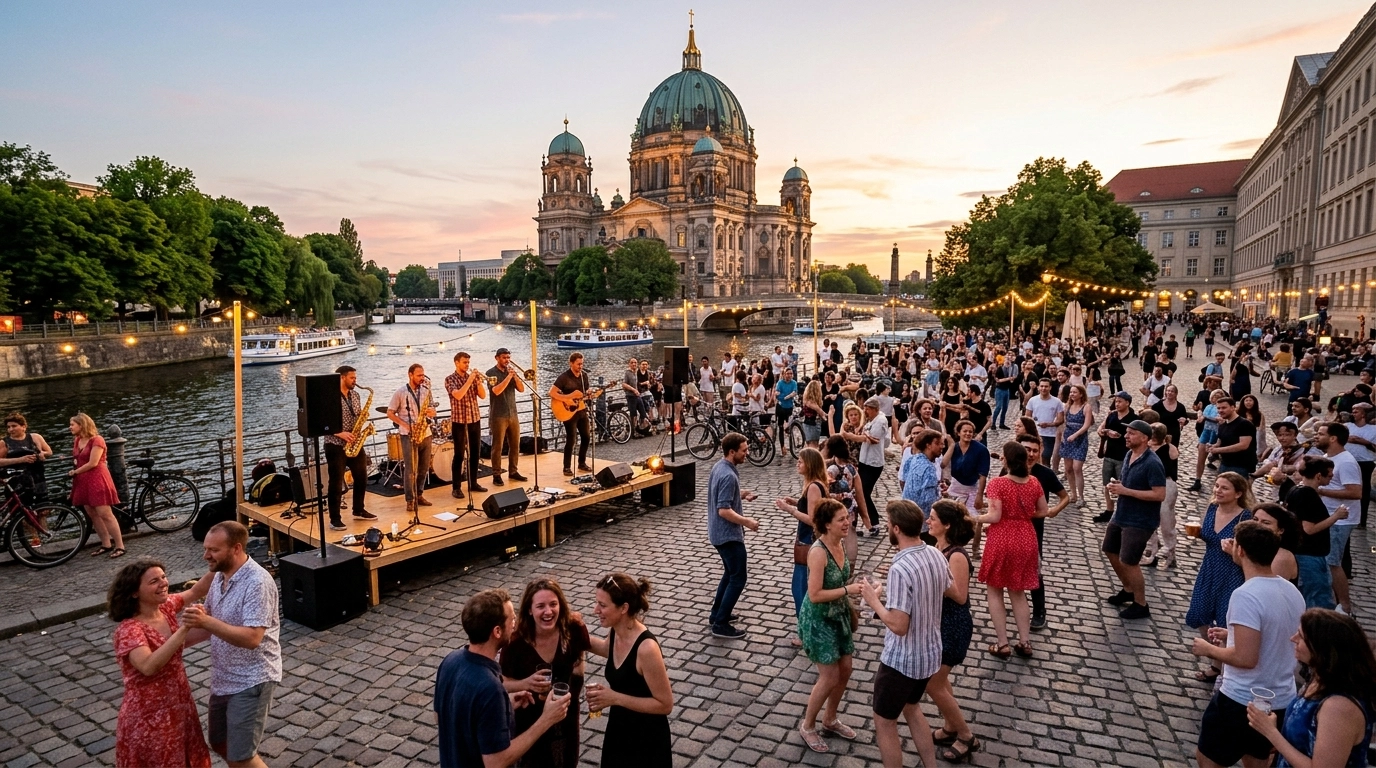
Mitte piles tourist and local stages together: sets around Berlin Cathedral and Museum Island, the square at Nikolaikirche, outdoor bills in front of large bookstores such as Dussmann, and classical houses within walking distance (Konzerthaus and the Friedrichstadt area). Crowds are thickest here – good for first-timers, less so for quiet listening. Brandenburg Gate and Unter den Linden appear often in Fête photos but are not automatically a main stage; check the 2027 map. U- and S-Bahn nodes at Museum Island, Alexanderplatz and Brandenburg Gate make Mitte the easy start.
Friedrichshain-Kreuzberg: neighbourhood yards, RAW and Holzmarkt
Since the 1990s Friedrichshain and Kreuzberg have carried the densest mix of clubs, courtyards and street bills. Recent anchors include Holzmarkt on the Spree, the RAW grounds with House of Music and the Cassiopeia skatepark, Warschauer Strasse, the Görlitzer area and canal bars such as Ankerklause. Brass, indie, punk, hip-hop and electronic aftershows often sit a few minutes apart. The twin district was partner in 2023 and stays one of the fullest clusters without that title. Evenings get tight; afternoons are made for hopping yard to yard.
Prenzlauer Berg: Kulturbrauerei, planetarium and pub stages
Prenzlauer Berg (Pankow borough) mixes beer gardens, churches, care homes and large cultural addresses. Kulturbrauerei (Schoenhauser Allee 36) hosted the Berlin Brass Festival in 2026; the Zeiss Planetarium (Prenzlauer Allee 80) programmed electronic and pop acts. WABE, Pfefferberg, Garage Pankow and Frannz beer garden are among the regulars – many return most years, none are confirmed for 2027 yet. U2 Eberswalder Strasse and the Prenzlauer Allee S-Bahn stop are practical gates. Pankow was partner district in 2025; density stays high.
Wedding and Centre Français de Berlin
In Wedding, Centre Français de Berlin (Muellerstrasse 74, U6 Rehberge) is one of the city’s longest-running Fête hosts – a 17th edition in 2026, often under a “Sounds of Europe” banner with Franco-German-Bosnian exchange, choirs and a family programme. Leopoldplatz and other neighbourhood yards add more of north-central Berlin. For visitors who do not want only Friedrichshain, this is the clear tip: shorter queues, diplomatic and community stages, easy U-Bahn.
Parks, museums and green spaces in Berlin
The Fête also lands where no club exists: museum gardens, community centres, churchyards, Tempelhof Field (two stages at the THF Tower in 2026), the Tegel shoreline, community gardens. That is the point of the rotating partner district since 2018 – after Lichtenberg, Treptow-Koepenick, Mitte, Marzahn-Hellersdorf, Neukoelln, Friedrichshain-Kreuzberg, Tempelhof-Schoeneberg, Pankow and Reinickendorf, a still-unnamed borough will take 2027. Going to the partner district is how you see Berlin beyond the postcard routes; in 2026 that even included extra bike loops around Lake Tegel.
Fête de la Nuit: clubs and indoor rooms after 22:00
At 22:00 the open-air street privilege ends; indoors it continues. Official indoor venues – clubs, bars, cultural houses – stay part of the Fête if they registered and remain free. Last season included Ritter Butzke in Kreuzberg with an electronic bill and dozens of neighbourhood pubs. Fête de la Nuit has no single curfew. If you want clubs, check in June which rooms are actually listed – not every Berlin nightspot on 21 June is a Fête partner.
Classical houses: Philharmonie and Konzerthaus Berlin
The Berliner Philharmoniker often ties 21 June to an open day; in 2026 Kirill Petrenko and the orchestra played Tchaikovsky in the main hall – free because it was Fête. Konzerthaus, churches and music schools use the same date for choirs, chamber groups and student ensembles. Those 2027 programmes are not out yet; if you want classical, from May onwards filter “classical” and “Mitte” on the Fête site and check philharmonie and Konzerthaus pages in parallel. It is the quietest cluster of the day, and the one visitors skip.
Tickets & Admission for Fête de la Musique Berlin
Fête de la Musique Berlin 2027 is entirely free. There are no audience tickets, caps or online registrations. You pay only for food and drink at stalls, beer gardens and shops; the concerts cost 0 EUR. The State of Berlin funds organisation, permits and GEMA for official venues at 100 percent via the Senate Department for Culture. Caveat: a museum tour or a house’s own ticketed show on the same day can follow different rules – only Fête-listed sets are guaranteed free. The programme goes online in early May 2027 at fetedelamusique.de. Stages can typically apply until 31 March (outdoor) and 30 April (indoor). Contact: [email protected], Musicboard Berlin GmbH, Gerichtstrasse 35, 13347 Berlin.
Visitor Tips: Travel & Accommodation in Berlin
- Getting around: BVG and S-Bahn beat driving – the Fête is citywide and parking in Kreuzberg, Mitte and Prenzlauer Berg is poor on 21 June. A Deutschland-Ticket or 24-hour pass pays off because you will change districts. Bikes are the Berlin default; 2026 even published Fête bike routes in the partner district. Useful hubs: Alexanderplatz, Warschauer Strasse, Eberswalder Strasse, Hauptbahnhof.
- Weather and clothing: 21 June is astronomical summer, often warm, sometimes stormy. Pack sun protection for the afternoon, a light layer for 22:00, and comfortable shoes. There is no festival cloakroom across 300 sites – small bags only.
- Where to stay: Book early; a Monday solstice can still sit inside a travel week. Mitte and Prenzlauer Berg work as bases; Friedrichshain sits closer to the loudest clusters. Ring-bahn hostels cut taxi hops between neighbourhoods.
- How to navigate: Do not try to see “everything”. Two or three districts plus one indoor finale is enough. Screenshot the programme map; mobile data dies at hotspots (Warschauer, Cathedral, Tempelhof). Bring earplugs for brass and clubs, and a water bottle.
- Rules: Acoustic street music yes; an unlicensed full PA on the street no. Keep distance from hospitals, schools and memorials. Take your rubbish (#GreenFETE). After 22:00, outdoor volume drops or stops – keep going only in listed Fête de la Nuit indoor rooms.
Note: The information on this page was researched at the time of writing and may have changed since then (e.g. date, venue, or program). Visit the organizer's official website →
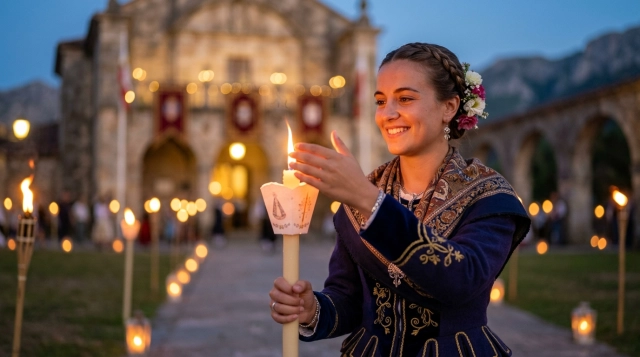
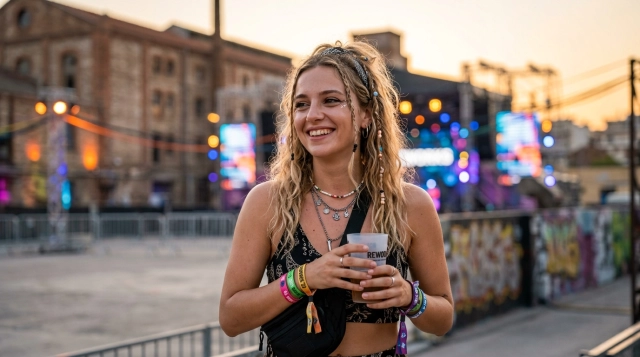
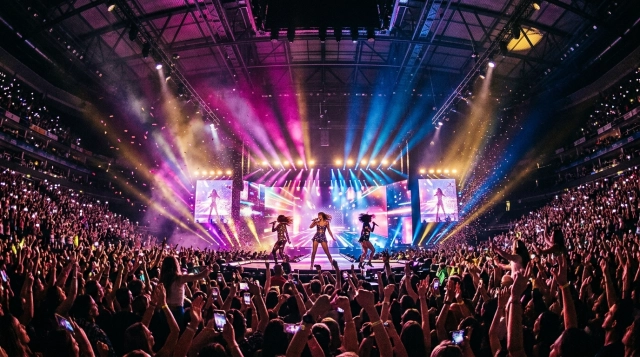
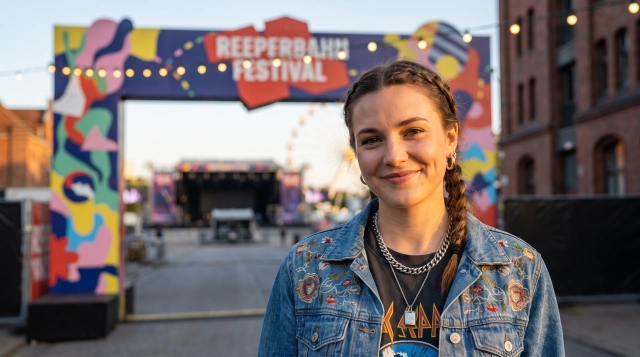
The photo used is illustrative and does not necessarily depict the actual event.