Are you attending?
Event Details
The Historic Carnival of Ivrea 2027 – A Festival of Freedom and Oranges
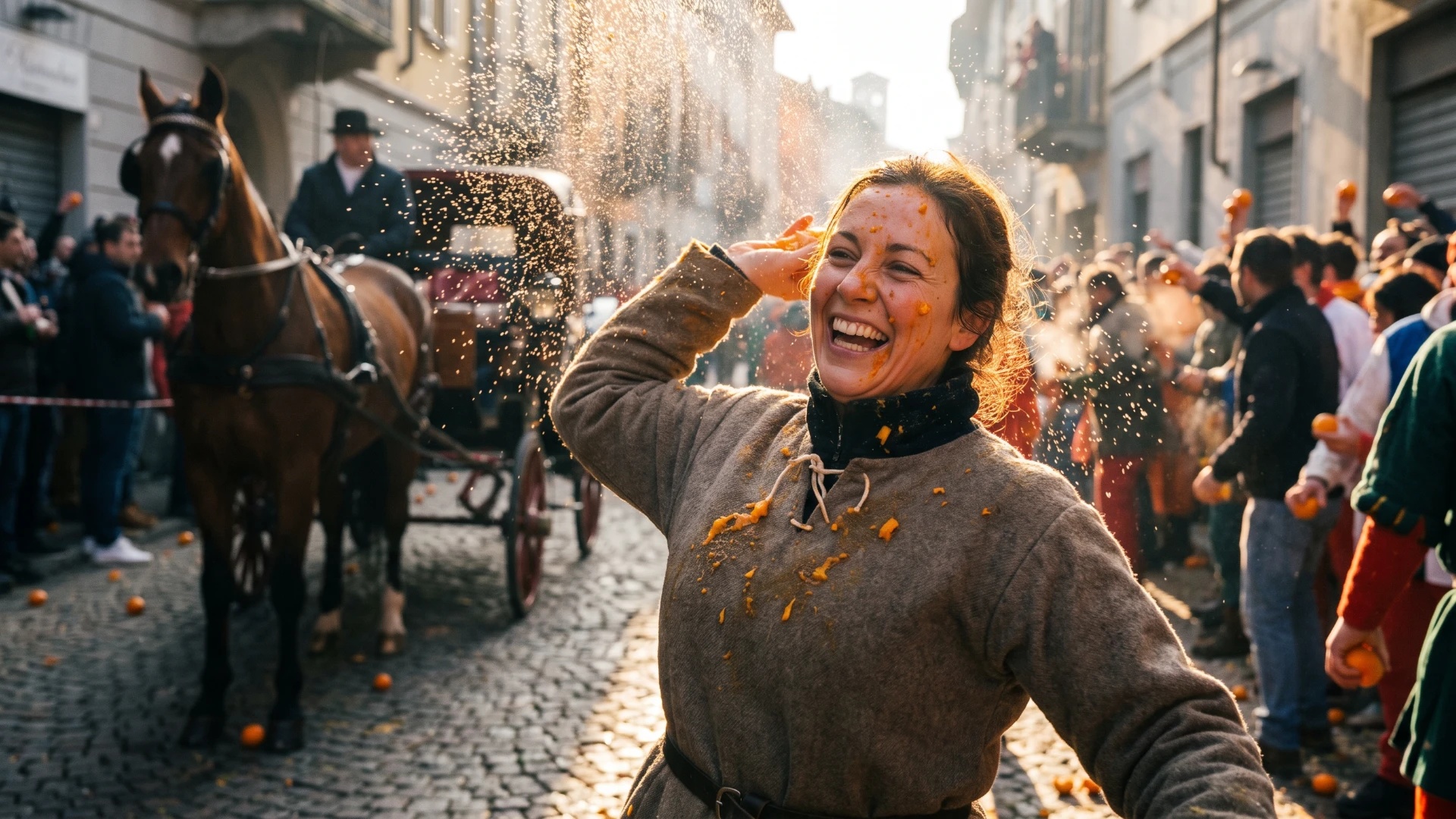
From 4 to 9 February 2027, the northern Italian town of Ivrea transforms into a citrus-soaked battlefield. The Storico Carnevale di Ivrea is the oldest historic carnival in Italy and home to one of the world's most extraordinary spectacles: the Battaglia delle Arance, or Battle of the Oranges. Over three days, nine teams on foot and throwers on horse-drawn carriages hurl around 500 tonnes of oranges at each other, re-enacting a medieval rebellion against a tyrant. Between 100,000 and 150,000 visitors travel to this small Piedmontese town each February to witness this remarkable cultural tradition.
The Story Behind the Carnival
The legend tells of a brave miller's daughter named Violetta (the Vezzosa Mugnaia) who defied the tyrant ruling Ivrea in the Middle Ages. The Marquis claimed the ius primae noctis, the right to spend the first night with every newly married woman. Violetta refused, killed the tyrant and sparked a popular uprising that burned down his castle. The oranges represent the stones hurled at the castle walls during the revolt. Every year, a young bride from Ivrea is chosen to embody Violetta, parading through the city on a golden chariot.
Find Accommodation in Ivrea
Compare the best hotel prices for this event and secure your accommodation in time.
Free cancellation on most hotels
Program 2027 (4 to 9 February)
The festivities officially begin on Thursday 4 February with the traditional transfer of power from the mayor to the Generale, the carnival's historical general figure who rides through the city in a Napoleonic uniform on horseback. On Saturday 6 February, the identity of the Vezzosa Mugnaia is revealed to the public from the balcony of the town hall, followed by a fireworks display over the Dora Baltea river. The three-day Battle of the Oranges begins on Sunday 7 February and continues through Shrove Tuesday, 9 February. Each afternoon from 2:00 PM, the nine foot teams take their positions across the historic squares: Piazza Ottinetti, Piazza di Città, Borghetto, Piazza del Rondolino and Piazza Freguglia. On Tuesday evening, the carnival closes with the prize-giving ceremony, the burning of the Scarli (wooden stakes) and the farewell ritual Arvédze a giòbia 'n bot. Ash Wednesday follows with the traditional distribution of polenta and salted cod on Piazza Lamarmora.
The Nine Aranceri Teams
Nine historic teams from Ivrea participate in the battle. The oldest is Asso di Picche (founded 1947), whose home ground is the main town square. Other teams include Aranceri della Morte (1954, black jersey with white skull), Tuchini del Borghetto (1964, green jersey), Scacchi (1964, black and white chequered) and Scorpioni di Arduino (1966). The foot throwers wear no protective gear and represent the rebelling people. The carriage throwers wear leather helmets and play the role of the feudal army.
Tickets and Entry
Entry to the historic centre on Carnival Sunday (7 February 2027) requires a paid ticket, available online via TicketOne. Entry is free for children under 12, residents of Ivrea, disabled visitors and all registered Aranceri. Those who want to actively participate in the orange battle can join one of the nine teams and receive an official registration patch for the season.
Visitor Tips
- Wear a Berretto Frigio, the red Phrygian cap: it signals that you are a spectator and not a participant. These are sold at stalls near the entrance to the historic centre.
- Dress in warm, dark clothing you do not mind ruining with orange juice and peel.
- Watching from behind the metal safety nets on the battle squares is the safest option for spectators.
- Travel by train from Turin (approximately 40 minutes); parking in the town centre is extremely limited on battle days.
- Book accommodation in Ivrea and the surrounding area several months in advance.
- On Sunday morning, join the Fagiolata: a free distribution of traditional fatty beans at various points across the city, a beloved community ritual dating back to medieval times.
Note: The information on this page was researched at the time of writing and may have changed since then (e.g. date, venue, or program). Visit the organizer's official website →
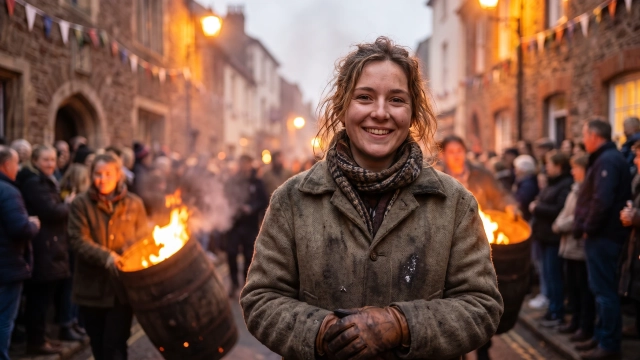
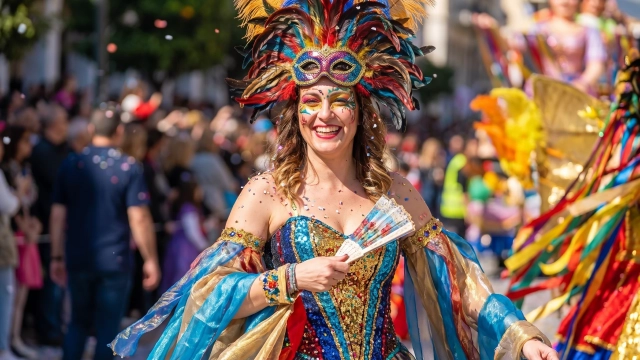
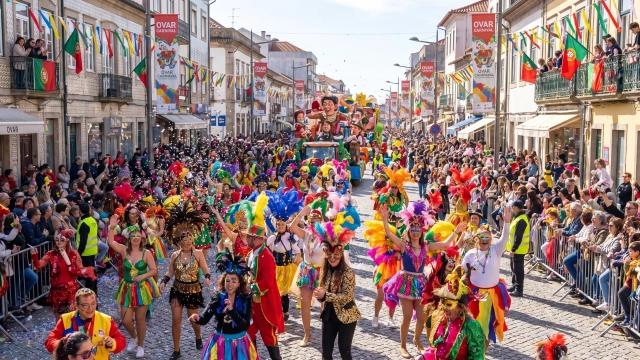
The photo used is illustrative and does not necessarily depict the actual event.