Are you attending?
Event Details
What is Jāņi? Latvia's Most Important Festival
Jāņi (pronounced "Ya-nyee") is Latvia's most important national holiday and one of the oldest living celebrations in Northern Europe. Together with Līgo on the evening of 23 June, Jāņi on 24 June forms a two-day midsummer festival marking the summer solstice and the shortest night of the year. Both days are official public holidays in Latvia. The roots of Jāņi predate Christianity: ancient Baltic tribes honoured the sun god and the fertility deity Jānis with bonfires, singing and rituals. Today the festival is a vibrant link between ancient tradition and modern national identity, drawing visitors from across the world.
Dates 2027
In 2027, the Latvian midsummer festival takes place on the following official public holidays:
- 23 June 2027 – Līgo svētki (Midsummer Eve): Preparations begin in the afternoon. At dusk, bonfires are lit across the entire country.
- 24 June 2027 – Jāņi (St John's Day): Celebrations continue through the night until sunrise in the early morning hours.
Find Accommodation in Tüm Letonya
Compare the best hotel prices for this event and secure your accommodation in time.
Free cancellation on most hotels
Highlights and Traditions
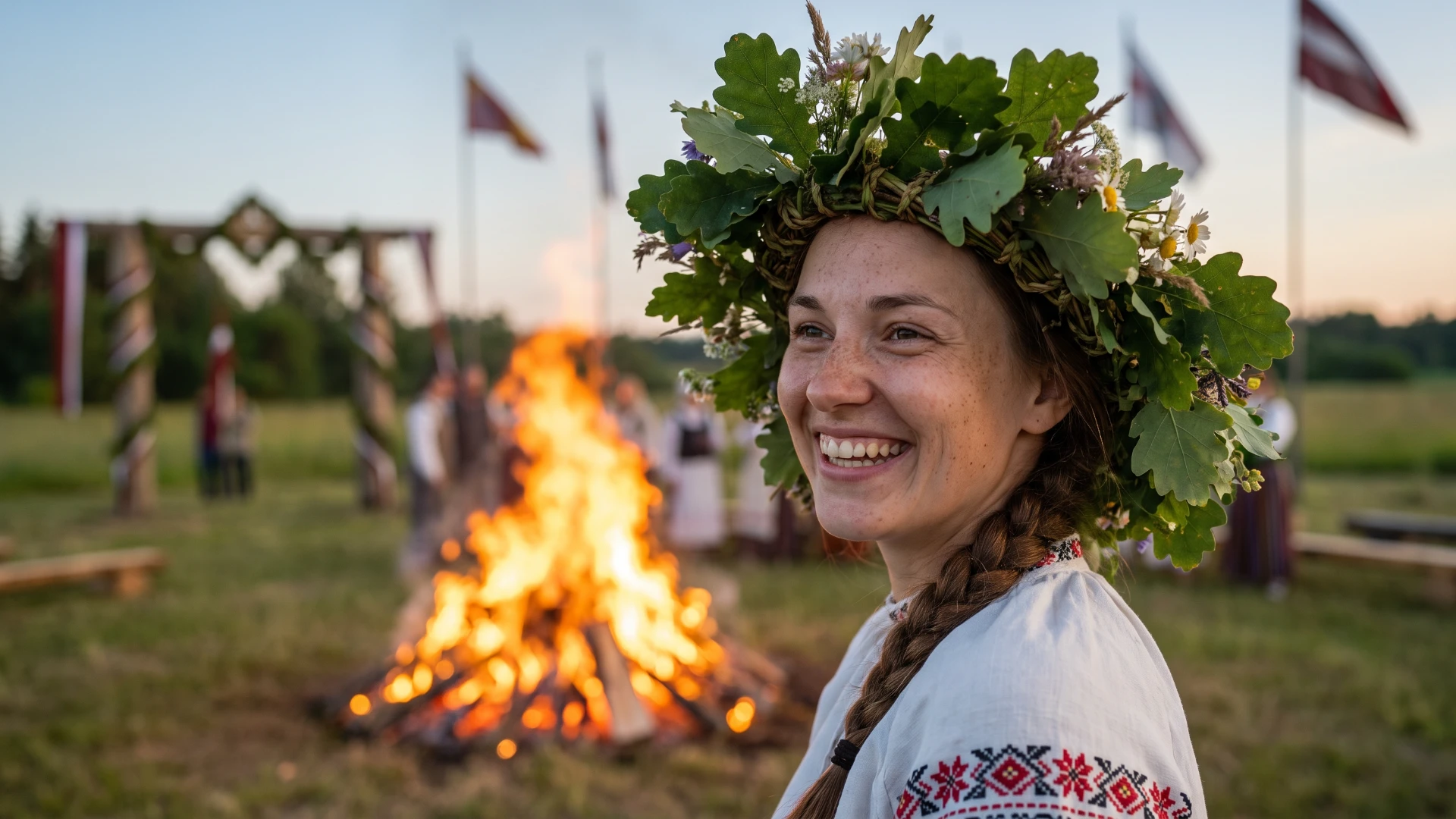
- Bonfire (ugunskurs): The central ritual of Jāņi. Fires are lit at dusk and burn through the short summer night until sunrise. Traditionally, bonfires were lit on hilltops to spread their light and blessings as widely as possible.
- Flower wreaths and oak leaf crowns: Women weave elaborate wreaths from wildflowers including cornflowers, daisies and clover. Men wear crowns woven from oak leaves, the sacred tree of the fertility god Jānis.
- Jāņu siers – Midsummer Cheese: A fresh sour-milk cheese made specifically for the festival, prepared with milk, curd and generous amounts of caraway seeds. Every Latvian household makes or buys Jāņu siers. It is eaten throughout the night alongside rye bread and butter.
- Jāņu alus – Midsummer Beer: A slightly sweet, lightly hopped farmhouse-style beer brewed especially for the festival. Latvian breweries produce dedicated Jāņi beers, while many families brew their own from traditional herbal recipes.
- Līgo singing: Traditional folk songs with the characteristic refrain "Līgo" are sung throughout the night by groups gathering around the bonfire.
- Jumping over the bonfire: An ancient ritual tradition: leaping over the flames is believed to ward off misfortune and bring good luck and fertility for the year ahead.
- Search for the fern flower: According to Latvian folklore, the mythical fern blossom opens at midnight during Midsummer. Finding it is said to bring wisdom and great fortune.
- Celebrating until sunrise: Latvian tradition holds that anyone who sleeps on Midsummer night will be lazy for the rest of the year, so festivities continue until dawn.
Where is Jāņi Celebrated?
The festival takes place throughout all of Latvia. Most Latvians leave the cities for the countryside at Jāņi, celebrating on farms, by rivers, along the Baltic coast or in forests. In the capital Riga, public events, folk concerts and traditional dance performances are held, particularly at the Open-Air Ethnographic Museum. Homes and farmsteads are traditionally decorated with birch, oak and rowan branches, ferns and floral garlands.
Visitor Tips
- Book accommodation and a rental car several months in advance; Latvia is heavily booked over Jāņi and many hotels sell out early.
- The festival is free to attend and requires no ticket. Tickets may be required for specific organised concerts or events.
- Dress festively: wearing a flower wreath or oak leaf crown is warmly welcomed and shows respect for tradition.
- Prepare for the shortest night of the year: in Latvia it never fully gets dark around the solstice, even at midnight.
- Make sure to try Jāņu siers (caraway cheese) and locally brewed midsummer beer.
- Fly into Riga via airBaltic, which connects well to most European cities.
- Note that nearly all shops, offices and banks are closed on Jāņi. Plan ahead for food and supplies.
Note: The information on this page was researched at the time of writing and may have changed since then (e.g. date, venue, or program). Visit the organizer's official website →
The photo used is illustrative and does not necessarily depict the actual event.