Are you attending?
Event Details
Welcome to the Kukerlandia Masquerade Festival in Yambol
The International Masquerade Festival Kukerlandia in Yambol is one of the most extraordinary folk culture events in Europe. Each year, this southeastern Bulgarian city transforms into a dazzling spectacle of enormous masks, thundering bell-adorned costumes and ancient rituals designed to chase away evil spirits and welcome the coming of spring. The festival takes place traditionally in late February, timed around Sirni Zagovezni (Orthodox Cheesefare Sunday), and has long been a cornerstone of Bulgarian folk heritage.
Highlights
- Competitive parades of Kukeri groups from across Bulgaria and abroad
- Children's festival "Az sam kukerce" (I am a little Kukeri) on the opening day
- Grand opening spectacle with fireworks in the city park
- International masked groups from Europe, Asia and Africa
- Exhibitions, creative workshops and traditional folk markets
- Alley of giant masks reaching up to 3 metres in height
- Total prize fund of 10,000 euros for competing groups
- Concerts, photo exhibitions and ethnographic demonstrations throughout
Find Accommodation in Yambol
Compare the best hotel prices for this event and secure your accommodation in time.
Free cancellation on most hotels
Program
The festival runs across several days. The opening day features the children's parade programme with the children's folklore festival "Az sam kukerce". Over the following days, thousands of Kukeri, Mechkari, Survakari, Dzhamalar, Babugeri and Rusalii fill the streets and park of Yambol. The centrepiece is the competitive parade of men's and youth masquerade groups, staged on two platforms in the city park. The festival concludes with a ceremony awarding prizes to the best groups. The programme is rounded out with concerts, folk art markets, photography competitions and craft workshops where visitors can discover the art of traditional mask-making.
Background: What is Kukeri?
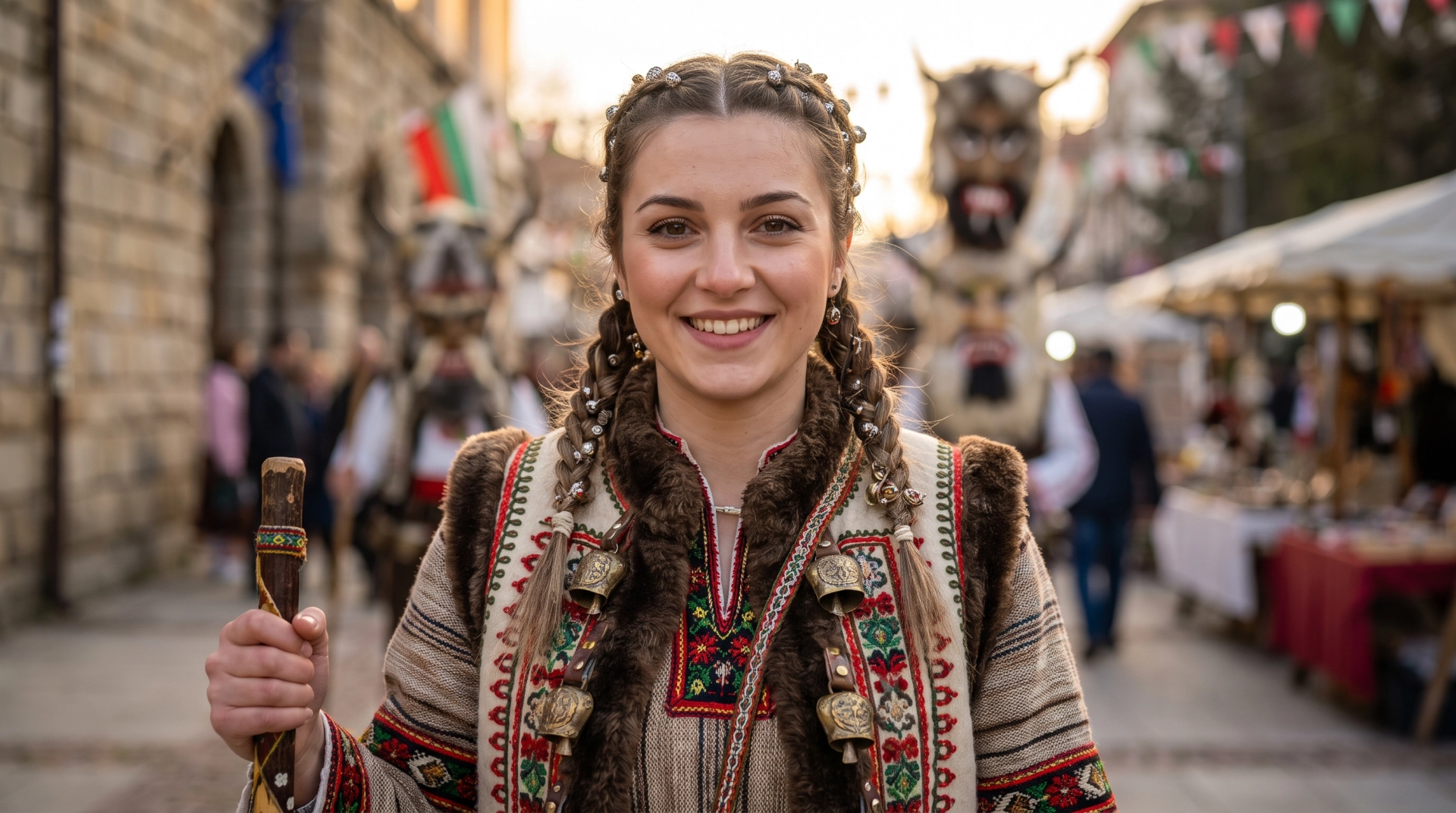
Kukeri is an ancient pre-Christian ritual from Bulgaria in which men dress in elaborate animal costumes and hand-carved wooden masks, dancing through their villages to drive out evil spirits. The name derives from an Old Slavic word meaning evil spirit. Their heavy bell belts ring out loudly as they dance, and the ritual is believed to bring fertility and prosperity for the coming year. The tradition is recognised by UNESCO as intangible cultural heritage. Yambol is one of the most important centres of this living tradition alongside Pernik and Shiroka Laka; the eastern Bulgarian Kukeri style preserved in Yambol differs significantly from western Bulgarian variants in costume design and ritual form.
Tickets & Admission
Admission to the outdoor parades and events in the city park is free of charge. Some evening concerts or special events may carry separate ticket fees. Competing groups apply officially to the Municipality of Yambol and receive financial support toward their travel costs. The festival is organised by the Municipality of Yambol and the Municipality of Tundzha, with financial support from EU funds (NextGenerationEU).
Visitor Tips
- Arrive early: the competitive parades on the final weekend draw over 100,000 visitors.
- Dress warmly; Yambol in late February typically sees temperatures between 5 and 10 degrees Celsius.
- Book accommodation several months in advance, as Yambol fills up quickly during festival week.
- Travel by bus or train: Yambol is well connected from Sofia (approx. 4 hours), Plovdiv and Burgas.
- The traditional mask alley in the park is especially photogenic in the early morning hours.
- Local food specialities and handmade souvenirs are available directly on the festival grounds.
Note: The information on this page was researched at the time of writing and may have changed since then (e.g. date, venue, or program). Visit the organizer's official website →
The photo used is illustrative and does not necessarily depict the actual event.