Are you attending?
Event Details
What is Noc Kupały?
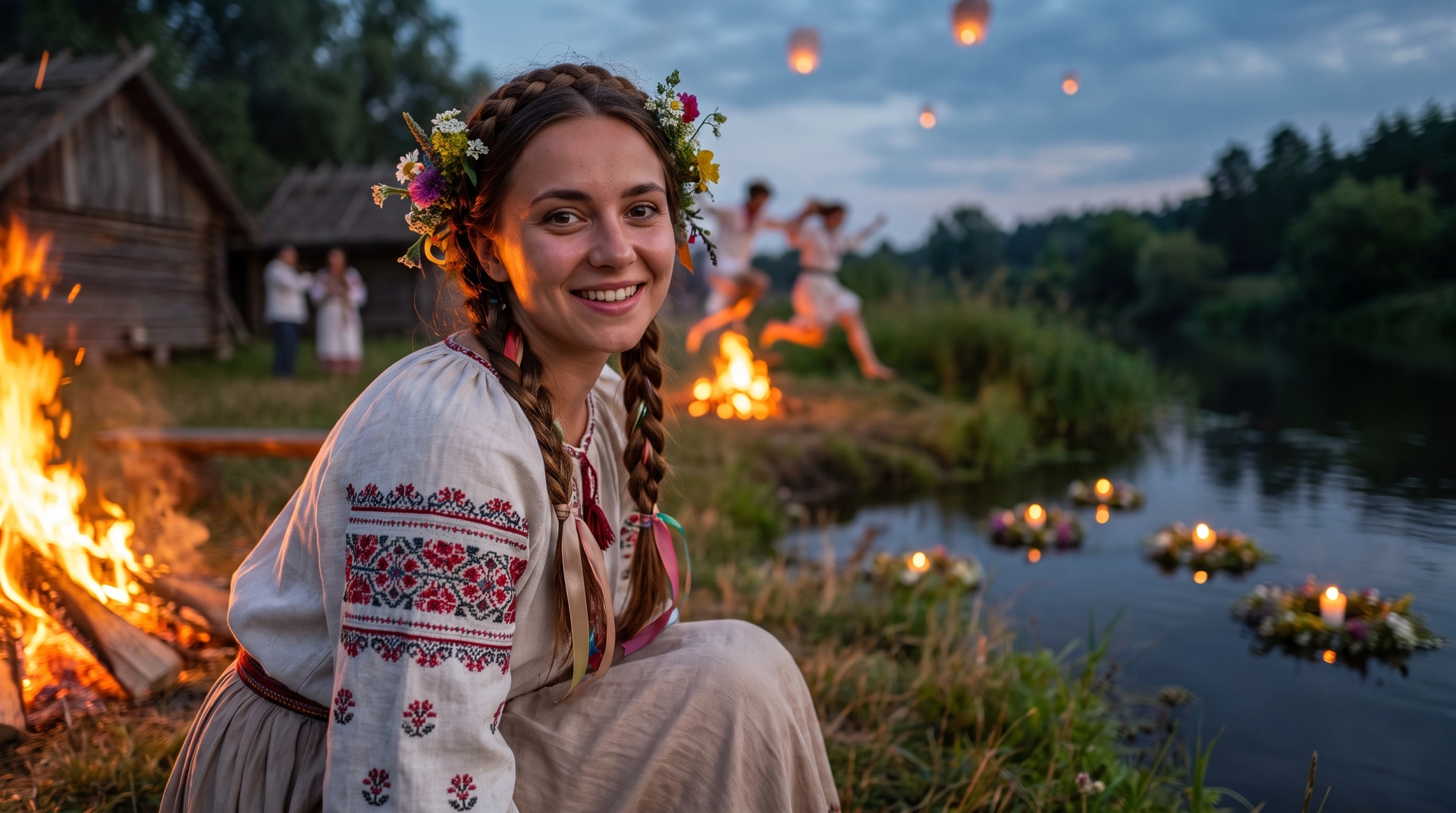
Noc Kupały (also known as Noc Świętojańska or Sobótka) is the oldest Slavic summer festival, celebrated on the shortest night of the year. The event blends ancient pagan rituals with Christian tradition. In Poland, it falls on the night of 23 to 24 June, the eve of St John the Baptist's Day. In 2027 this falls on the night of Wednesday, 23 June. The word "Kupała" derives from the Slavic root for bathing, reflecting the central role of water in the celebrations. The festival is considered the night of fire, water, love and fertility.
Highlights
- Jumping over bonfires as a purification ritual for couples and individuals
- Flower wreaths on the water (Wianki): girls weave wreaths of herbs and flowers and float them on rivers to read their romantic fortunes
- Three-day Wianki Festival in Kraków (19 to 21 June) with live concerts, silent disco and craft workshops
- Unplugged sunrise concert on 21 June at 3:30 AM on the Vistula riverbank
- Search for the mythical fern flower, said to bloom only on this magical night
- Herb gathering, fortune-telling and folk dances in traditional costumes
- Most city-organised events are free of charge
Find Accommodation in Kraków
Compare the best hotel prices for this event and secure your accommodation in time.
Free cancellation on most hotels
Program 2027
The most prominent public Kupała celebration in Poland is the Wianki Festival in Kraków, organised by the Kraków Festival Office (Krakowskie Biuro Festiwalowe). The festival takes place in the weekend around the summer solstice and runs for three days, 19 to 21 June 2027. The venues stretch along the Vistula riverbanks (Bulwary Wiślane) between the Dębnicka Bridge and Wawel Castle. The closing highlight is an acoustic concert at 3:30 AM on 21 June at Bulwar Poleski, where Kupała songs are performed to welcome the sunrise. The official Noc Kupały falls on the night of 23 to 24 June 2027. Across Poland, bonfires are lit on riverbanks, wreaths are floated on the water and ancient rituals are observed in towns and villages throughout the country.
Traditions & Rituals
- Bonfire jumping (Przeskakiwanie przez ognisko): Couples jump hand in hand over a bonfire. A successful jump without breaking the grip is said to guarantee a lasting bond.
- Floating wreaths (Puszczanie wianków): Girls weave wreaths from herbs and wildflowers and set them adrift on the water with a lit candle. A wreath that floats far promises a forthcoming marriage; one that sinks foretells misfortune.
- The fern flower (Kwiat paproci): Slavic legend holds that ferns bloom only on this one night. Whoever finds the flower gains wealth and magical powers.
- Gathering medicinal herbs: Herbs harvested during Kupała Night are believed to hold exceptional healing properties.
- Ritual bathing: Rivers and lakes are said to carry purifying and healing powers during Kupała Night.
Where to Celebrate in Poland
- Kraków: The three-day Wianki Festival on the Vistula riverbanks is the largest urban Kupała event in Poland; free admission.
- Warsaw: Wianki events along the Vistula and in various city districts, partly organised by local cultural centres.
- Byczyna (Opole Voivodeship): The traditional Noc Kupały festival at the Gród Rycerski living history site, featuring concerts, lectures and Slavic rituals.
- Podlaskie region (Eastern Poland): Particularly authentic celebrations by the Ukrainian and Belarusian diaspora, often held on multiple Saturdays in July along riverbanks.
- Wrocław: Events at lakes and rivers on the city's outskirts, including at Kopalnia Wrocław.
Visitor Tips
- In Kraków, arrive at least one day before the Wianki Festival; hotels in the Old Town fill up quickly around this date.
- The Vistula riverbanks get very crowded in the evening; arriving early secures a good spot.
- Wear comfortable clothing suited to the weather; nights on the riverbank can be cool.
- Flower wreaths can be woven from wildflowers and herbs; ready-made ones are also sold at festival stalls.
- Most events in Kraków and Warsaw are free to attend.
- Use public transport; Kraków's MPK operates special night services until approximately 3:00–4:00 AM during the festival.
Note: The information on this page was researched at the time of writing and may have changed since then (e.g. date, venue, or program). Visit the organizer's official website →
The photo used is illustrative and does not necessarily depict the actual event.