Are you attending?
Event Details
What Is a Panigiri?
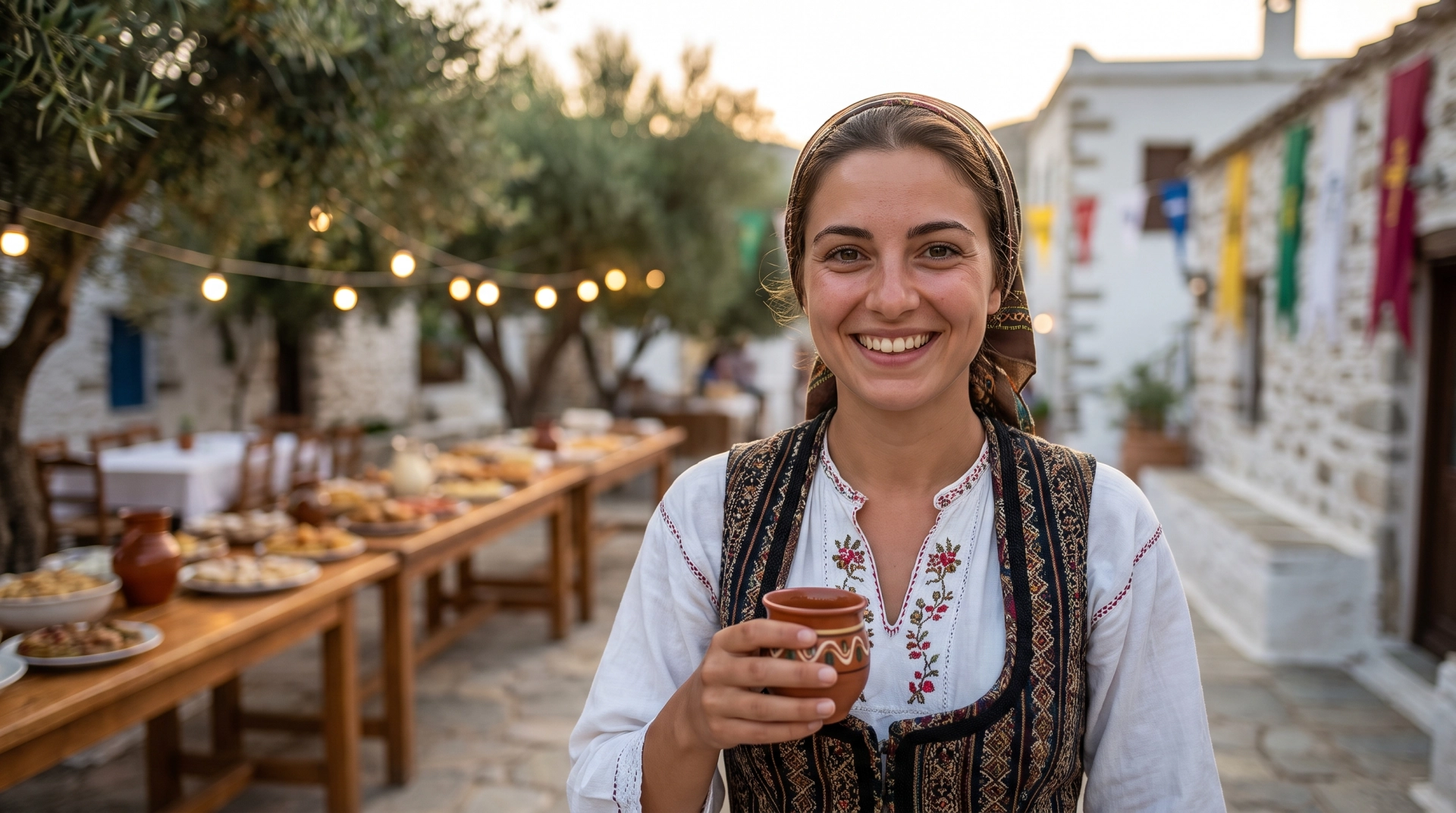
A panigiri (Greek: πανηγύρι) is Greece's oldest and most living folk festival. Held in honour of the patron saint of a village church, it combines Orthodox religious tradition with a fully open community celebration. The day begins with a morning liturgy; by evening, the village square fills with long tables, live regional music, local food and wine, and circle dancing (horos) that continues until well past midnight. There is no entry fee. Everyone is welcome.
The word derives from the ancient Greek panégyris, meaning an assembly of all the people. On islands like Ikaria, panigiria have historically funded roads, schools and health posts that the Greek state did not provide, which is why they remain genuinely civic institutions rather than tourist attractions.
Season 2026: Key Dates at a Glance
The 2026 panigiria season opens on 21 May with the feast of Saints Constantine and Helen and closes on 14 September with the Exaltation of the Cross. The single biggest day of the entire year is 15 August 2026 (Dekapentavgoustos), the feast of the Dormition of the Virgin Mary; in 2026, it falls on a Saturday, which means ferries and accommodation will be even busier than usual.
- 21 May 2026 – Saints Constantine and Helen: Opens the summer season across many islands
- 29 June 2026 – Saints Peter and Paul: Widespread celebrations on islands and the mainland
- 17 July 2026 – Agia Marina: One of the most celebrated summer saints throughout the Cyclades
- 20 July 2026 – Profitis Ilias: Hilltop and mountain chapels with dramatic settings
- 26 July 2026 – Agia Paraskevi: Major festivals on Lesvos and across the islands
- 6 August 2026 – Metamorfosi (Transfiguration): The opening of the great August fortnight; especially important on Ikaria
- 15 August 2026 – Dekapentavgoustos (Dormition of the Virgin): The single biggest panigiri day in all of Greece
- 23 August 2026 – Enniamera: The nine-day continuation of the Marian celebrations; more panigiria particularly in the Cyclades
- 8 September 2026 – Nativity of the Virgin: Marks the close of the high season
- 14 September 2026 – Exaltation of the Cross: Final major feast of the panigiria summer
Best Islands for an Authentic Panigiri Experience
Ikaria
Ikaria is the panigiri island. Its calendar runs near-weekly from late June to mid-September, with around 92 festivals documented for 2026. The Panigiri of Langada on 15 August, held in the mountain village of Langada above Agios Dimitrios in the Raches area, is widely regarded as the largest panigiri in the Aegean. The celebration begins with a morning liturgy at the nearby Mounde Monastery, then continues with communal eating, wine and all-night Ikariotikos dancing until well after sunrise. The Ikariotikos was inscribed on Greece's National Index of Intangible Cultural Heritage in January 2022. Traditional festival food is raskos, semi-wild mountain goat served as vrasto me pilafi (boiled meat with rice cooked in the broth).
Paros
Paros has at least 10 confirmed panigiria in 2026, beginning on 23 June with the Klidonas night in Alyki and Naoussa. The highlight is the feast of Panagia Ekatontapyliani on 15 August in Paroikia, one of the most important early Christian churches in the Cyclades (founded around 326 CE). The celebration includes processions, fireworks and traditional island music.
Tinos
On Tinos, at least one panigiri takes place every summer weekend from June to September. The 15 August feast is simultaneously one of the most important Orthodox pilgrimage days in Greece: tens of thousands of visitors come to Panagia Evangelistria, the church of the miraculous icon. Accommodation on Tinos around this date sells out many months in advance.
Crete
On Crete, every village with a church dedicated to the Panagia holds a major panigiri on 15 August. The Monastery of Paliani, roughly 25 km south of Heraklion near Venerato, draws several thousand pilgrims. Cretan panigiria are defined by the lyra and laouto duo, and musicians are always local; cover bands play no part in a genuine Cretan village feast.
Corfu
Corfu offers a particularly dense panigiria season. Confirmed 2026 dates include the traditional panigiri in Roda on 5 July, a two-day Sardine Festival in Anemomylos on 29 and 30 July featuring the Feakes Orchestra with roast lamb and souvlaki, and numerous celebrations around 11 August (Agios Spyridon) across several village communities on the island.
What to Expect: The Structure of a Panigiri
- Morning liturgy at the village church honouring the patron saint
- Evening feast from around 8:00 PM at long outdoor tables; lamb, goat, souvlaki, local wine and raki are typical
- Live music performed by local ensembles using violin, laouto, tsambouna (Greek bagpipe), santouri and clarinet; lyra on Crete and Dodecanese islands
- Circle dancing (horos) continuing until well past midnight; an open circle with no fixed leader; everyone joins in
- Festivities typically end between 3:00 and 5:00 AM
Practical Visitor Tips
- Entry: Panigiria are always free to attend. Visitors pay only for food and drink at stalls (approximately €3–8 per dish, €5–8 per half litre of local wine; raki is often offered free by local families).
- Cash only: Card readers are rare at village festivals; bring sufficient cash.
- Dress code: Covered shoulders and knees for the morning church service; light, comfortable clothing for the evening.
- Respect: A panigiri is a community event, not a tourist attraction. Ask before photographing elders or musicians.
- Accommodation: Book well in advance for the 15 August weekend on any island; Tinos in particular sells out many months ahead.
- Transport: Plan around local ferry and taxi schedules; major feast days can make car hire complicated on smaller islands.
Note: The information on this page was researched at the time of writing and may have changed since then (e.g. date, venue, or program). Visit the organizer's official website →
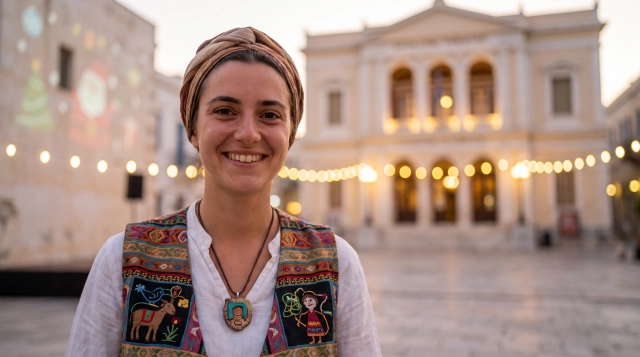
The photo used is illustrative and does not necessarily depict the actual event.